
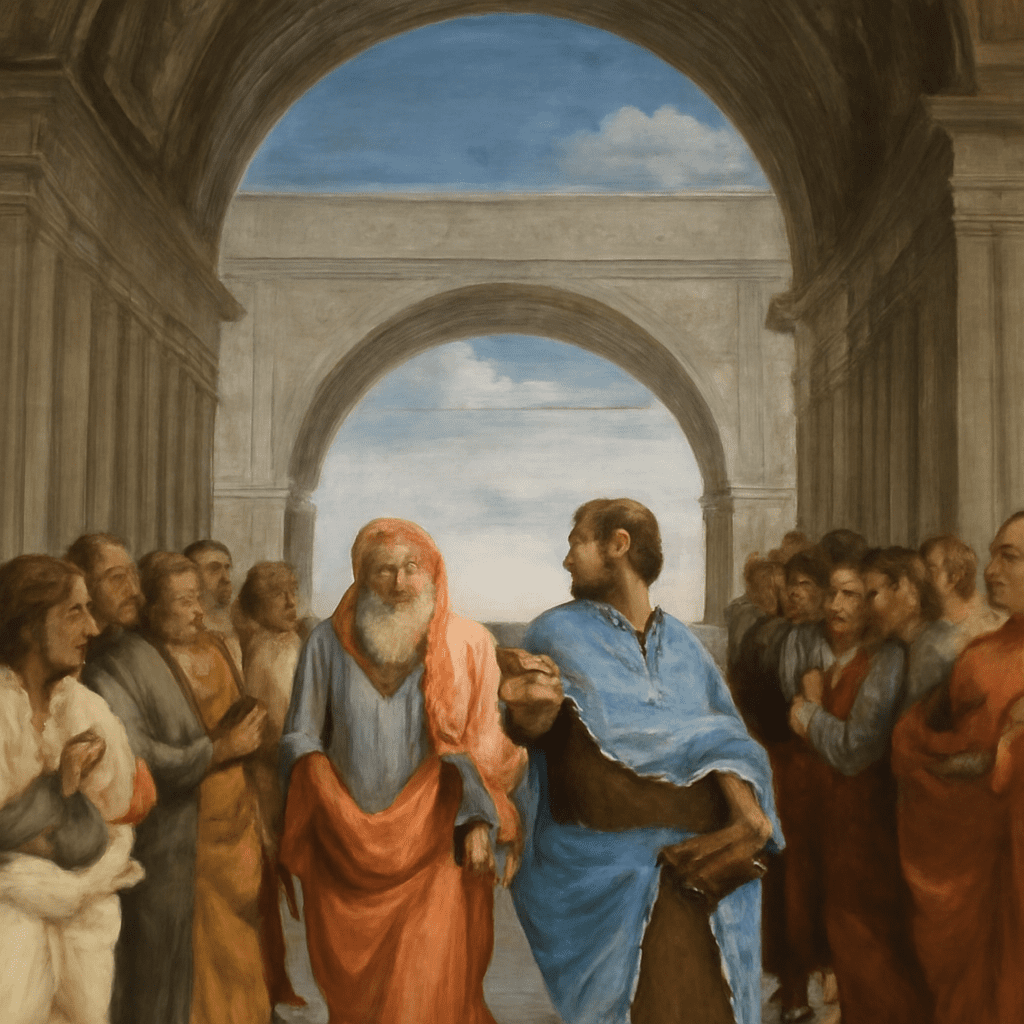
Raphael’s School of Athens painting stands as a beacon of intellectual enlightenment. This masterpiece, teeming with renowned philosophers including Plato, is more than an intricate depiction; it’s a vibrant tapestry of human thought and artistry. By immersing yourself in the nuances of Raphael’s work, you uncover insights into not only the minds that shaped Western philosophy but also the artistry that defined a pivotal era. Let’s embark on a journey through the illustrious corridors of this iconic artwork, exploring its historical context, key figures, and lasting impact on art and culture.
Introduction to the School of Athens Painting
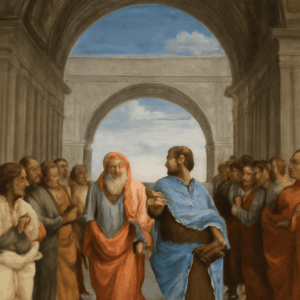
The School of Athens painting is a fresco that Raphael created during the High Renaissance era, epitomizing the philosophical grandeur of Ancient Greece. Housed in the Vatican, this artwork is part of the signature rooms known as the Raphael Rooms. As you gaze upon its intricate design, you see a congregation of philosophers, scientists, and mathematicians engaged in profound dialogue. It is a visual homage to human intellect and creativity, representing the synthesis of artistic excellence and philosophical inquiry during the Renaissance.
The Historical Context of Raphael’s School of Athens
Commissioned by Pope Julius II in the early 16th century, Raphael’s work reflects the Renaissance’s burgeoning interest in Ancient Greek philosophy. The School of Athens embodies the spirit of its time—a period marked by a resurgence in classical antiquity’s cultural and intellectual pursuits. As you delve into this era, you discover a society striving to reconcile Christian ideals with ancient wisdom, seeking harmony between religious beliefs and humanistic endeavors. Raphael’s fresco thus becomes a testament to this cultural rebirth, encapsulating the era’s intellectual curiosity.
Analyzing the Key Figures: Plato and Other Philosophers
Central to the School of Athens painting are figures like Plato, who engage in a symbolic dialogue representing different schools of thought. In the fresco, Plato points upwards, suggesting his theory of Forms—an idea emphasizing the existence of transcendent realities beyond our material world. As you observe, Aristotle stands beside him, his hand gesturing toward the earth, signifying his empirical approach to philosophy. Beyond them, figures such as Socrates and Pythagoras contribute to this tableau of intellectual exchange, each philosopher interacting in a dynamic congregation that mirrors their historical significance.
Artistic Techniques in the School of Athens
Raphael’s use of perspective in the School of Athens painting is a masterclass in artistic technique. The fresco’s architectural elements draw your eyes to the center, where Plato and Aristotle are positioned, demonstrating Raphael’s skill in composition. His adept manipulation of light and shadow, known as chiaroscuro, adds depth and realism, allowing figures to leap out from the fresco. Through Raphael’s brushstrokes, you encounter a harmonious blend of form and content, where artistry serves to amplify the philosophical narrative embedded within the painting.
The Legacy of the School of Athens Painting in Art and Culture
Over centuries, Raphael’s School of Athens painting has left an indelible mark on art and culture. Its influence transcends the boundaries of time, inspiring artists and thinkers to contemplate the relationship between knowledge and creativity. As you reflect on its legacy, consider how this work continues to be a touchstone for discussions about the intersection of philosophy and art. It serves as a reminder of the enduring power of visual storytelling—a way to engage with profound ideas through the medium of paint and imagination.
Safety recap: While discussing the School of Athens painting, remember that viewing art is a personal journey. Preserve the artwork’s integrity by experiencing it in person, respecting museum guidelines, and employing proper care when discussing its elements in educational settings.