
Frida Kahlo’s self portraits are more than mere reflections of her physical appearance; they are profound narratives that delve into her personal struggles and cultural identity. Many of her self portraits, including the famous Frida Kahlo Self Portrait with Thorn Necklace and Hummingbird, are laden with symbolism and emotion. These artworks provide a glimpse into the soul of an artist caught between pain and passion.
Addressing the emotional and cultural themes in Kahlo’s paintings can be both enlightening and inspiring for any artist. By examining her works, you can gain a deeper understanding of how personal experience and cultural background can influence and enrich your own artistry. Let’s explore the significance, techniques, and enduring impact of these remarkable portraits.
The Significance of Frida Kahlo’s Self Portraits
Understanding the Themes
Frida Kahlo’s self portraits delve deep into themes of identity, suffering, and resilience. Her work often reflects her physical and emotional pain, as seen in the iconic Frida Kahlo self portraits. By using vivid imagery and symbolism, she communicates complex emotions and personal narratives. The use of animals and nature often symbolizes deeper meanings, giving insight into her internal world.
Understanding these themes requires looking at how Kahlo used her own likeness to engage with issues around gender, race, and postcolonial theory. Her self-representations defy traditional beauty standards, emphasizing authenticity and vulnerability. This thematic exploration made her a pioneering figure in both art and feminist discourse.
Cultural and Personal Influence
Frida Kahlo’s Mexican heritage significantly influenced her artistic expression. In her self-portraits, you will find frequent use of traditional Mexican motifs and attire, celebrating her roots. This cultural symbolism in Frida Kahlo’s self portraits strengthens the narrative of her personal and national identity.
Moreover, her tumultuous personal life, marked by chronic pain and a turbulent marriage, is poignantly captured in her art. These experiences are woven into the fabric of her self-portraits, making her work resonate on a deeply personal level while also appealing to universal themes of love, loss, and endurance.
Exploring Famous Frida Kahlo Self Portraits
Frida Kahlo Self Portrait with Thorn Necklace and Hummingbird
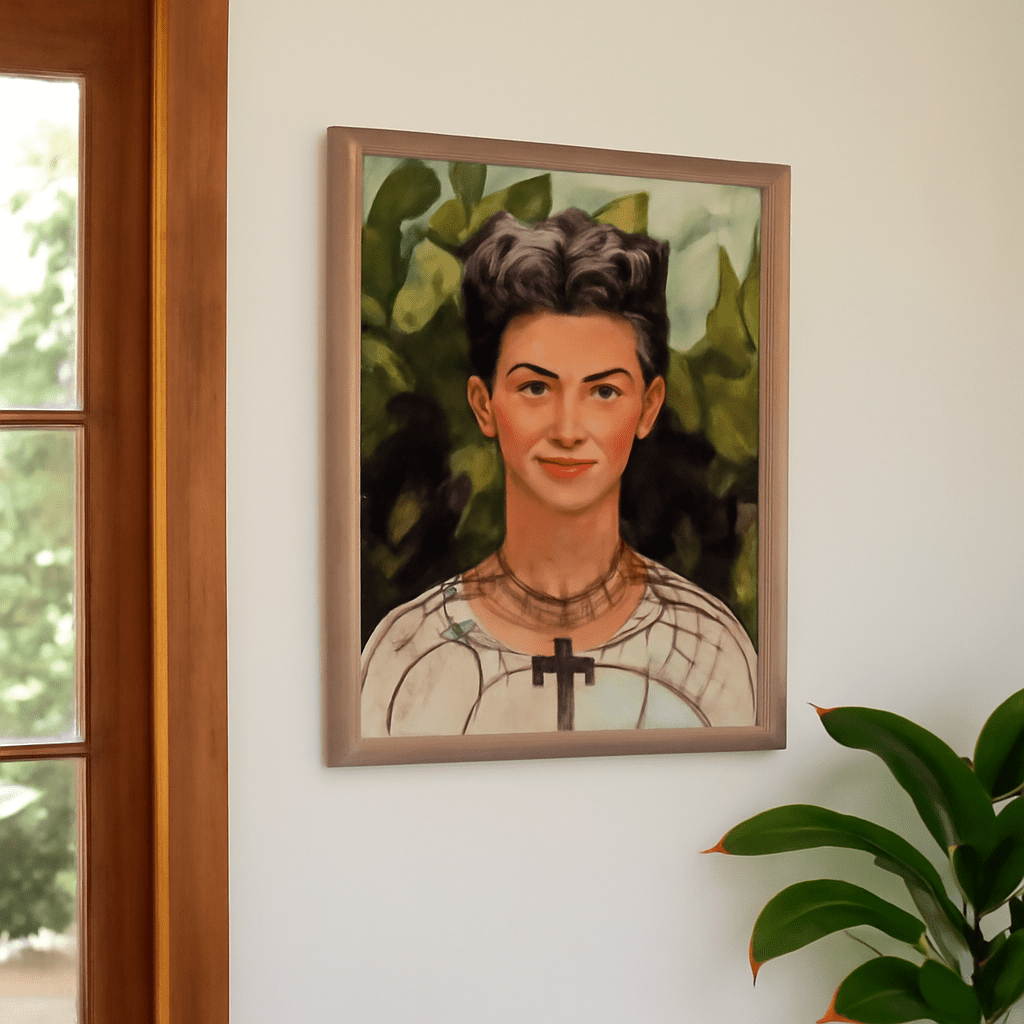
This particular self-portrait stands out among Frida Kahlo’s self portraits for its rich symbolism and emotive power. The thorn necklace suggests suffering and sacrifice, while the hummingbird, often a symbol of hope and life, contrasts with the ominous presence of a black cat.
In analyzing this artwork, you witness Kahlo’s masterful blending of personal symbolism with universal themes. The juxtaposition of vibrant colors against the somber expression on her face creates a striking visual and emotional impact, inviting multiple layers of interpretation.
Other Notable Self Portraits
Many of Frida Kahlo’s self portraits explore similar themes, each with its unique elements. Works like “Self Portrait with Cropped Hair” and “The Two Fridas” reflect her complex relationship with identity and autonomy. They capture moments of transformation and self-reflection, often incorporating surreal elements to transcend the ordinary.
Exploring these pieces allows you to appreciate Kahlo’s ability to convey profound narratives through her self-portraits. Her strategic use of composition and elements such as traditional Mexican dress, natural landscapes, and allegorical imagery continues to captivate and inspire audiences worldwide.
The Artistic Techniques Behind Frida Kahlo’s Self Portraits
Color and Symbolism
Color plays a crucial role in Frida Kahlo’s self portraits. She employed vibrant hues alongside darker tones to evoke emotion and highlight thematic contrasts. Her palette often mirrors her emotional spectrum and cultural heritage, drawing on traditional Mexican colors and motifs.
Understanding Kahlo’s use of color requires attention to how she pairs specific shades with symbolic elements—bright flowers against barren backgrounds, for instance—to enhance the emotional depth and narrative complexity of her portraits.
Composition and Style
Kahlo’s compositional choices in her self portraits are deliberate and impactful. Her use of stark, frontal compositions draws viewers directly into the emotional core of the artwork. This technique, combined with her precise and detailed style, creates an intimate and engaging viewing experience.
Additionally, her blending of surreal and realistic elements challenges traditional portraiture norms, offering new ways to perceive identity and emotion. This innovative approach has significantly influenced how self-portraiture is understood and appreciated in the art world today.
The Legacy of Frida Kahlo’s Self Portraits
Influence on Modern Art
Frida Kahlo’s self portraits have left an indelible mark on modern art. Her bold exploration of personal and cultural identity has inspired countless artists to embrace authenticity and vulnerability in their work. Her influence extends beyond painting, impacting fields like photography, sculpture, and performance art.
The enduring fascination with her work is evident in the numerous exhibitions and retrospectives dedicated to her legacy. Kahlo’s unique approach to art has paved the way for new dialogues in contemporary and feminist art circles, cementing her place as a pivotal figure in art history.
Continued Relevance Today
Today, Frida Kahlo’s self portraits continue to resonate with audiences worldwide. Her fearless exploration of personal and political themes remains relevant in contemporary discourse, inspiring new generations of artists and thinkers. The themes she explored—identity, resilience, and cultural pride—remain as pertinent today as they were in her lifetime.
Kahlo’s work serves as a powerful reminder of the transformative potential of art. By engaging with her self-portraits, you can explore these universal themes and find inspiration for your own creative journey, regardless of the medium.
Next Steps
Delving into Frida Kahlo’s self portraits provides rich insights into her techniques and symbolism. As you explore her work, consider how her use of color, composition, and cultural motifs can influence your own artistic practice. By embracing authenticity and vulnerability like Kahlo did, you can develop a deeper connection to your art and its potential to communicate complex narratives.