



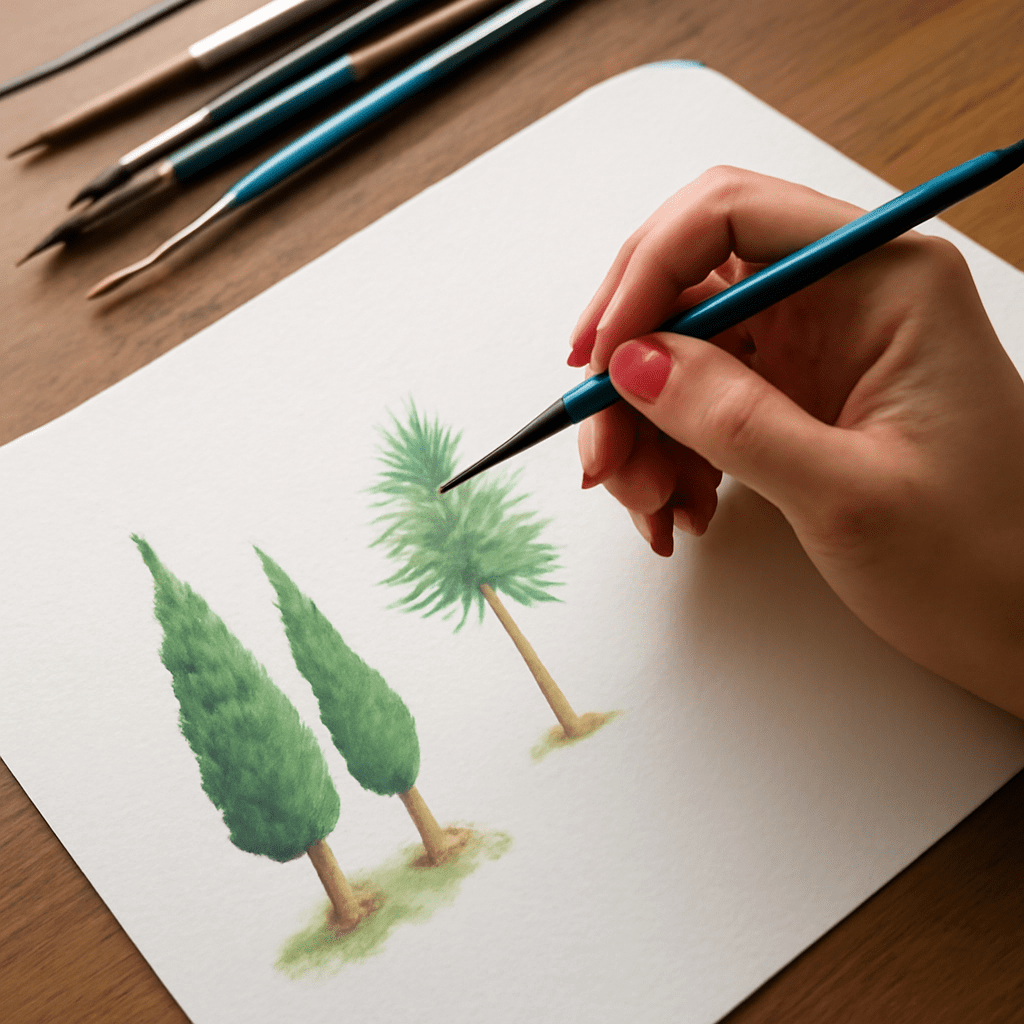
Creating a lush landscape on canvas can seem daunting, especially if you’re not sure where to start. Painting trees, with their complex structures and textures, often intimidates beginners. However, with the right techniques and tools, you can master the art of tree painting and bring your scenery to life with confidence. This guide will take you through painting a tree with ease, breaking down the process into manageable steps. Whether you are painting a tree for the first time or looking to refine your skills, discover how to paint trees with methods that ensure simplicity and beauty.
Getting Started with Painting Trees
Essential Supplies for Painting Trees
Starting your journey in painting trees requires gathering the right materials. You’ll need a sturdy canvas or paper that suits your chosen medium, such as acrylics or watercolors. Quality brushes in various sizes are essential, as they allow you to achieve different textures and details. Additionally, a palette for mixing colors and a clean water container is necessary for maintaining brush hygiene.
Choosing the Right Paint and Brushes Selecting the correct paint and brushes is crucial to your tree painting success. Acrylic paints are versatile and dry quickly, making them ideal for beginners. Watercolors, on the other hand, offer a more fluid and translucent appearance. Opt for brushes with synthetic bristles for acrylics, while natural hair brushes are better suited for watercolor applications. The choice of brush size will affect the ease with which you can create the intricate details of your tree painting.
Understanding Tree Anatomy for Painting
Breaking Down the Structure of Trees
To effectively paint trees, you must first understand their anatomy. Trees are composed of trunks, branches, and foliage, each requiring different techniques to depict realistically. Start by observing the main trunk, noting its texture and how it supports the branches. The branches should be painted in a way that they appear to naturally emerge from the trunk.
Observing Different Tree Types
Different tree types have unique characteristics that influence how you paint them. Observe how deciduous trees differ from conifers in shape and foliage density. Each tree presents its own challenge, and understanding these differences will guide your choice of color and brushstroke techniques when painting a tree.
Step-by-Step Guide: How to Paint Trees
Sketching the Basic Tree Shape
Begin your tree painting by sketching the basic shape. Use a light pencil to outline the tree’s trunk and primary branches. This forms the foundation of your painting, allowing you to adjust proportions before applying paint. Once satisfied with the sketch, lightly erase unnecessary lines to ensure they don’t show through your paints.
Adding Details to Your Tree Painting
With the basic shape in place, start adding details to your tree painting. Use smaller brushes to create the texture of bark on the trunk and branches. Experiment with different brushstrokes to achieve the desired effect. As you paint the foliage, consider the light source and use varied shades of green to give your tree depth and realism.
Techniques for Painting a Tree with Ease
Creating Realistic Tree Textures
Achieving realistic tree textures involves experimenting with various brush techniques. Dry brushing can add a rough texture to bark, while stippling can be used for leaves. Don’t be afraid to layer colors and textures to mimic the intricate details found in nature.
Using Color to Enhance Your Tree Painting
Color plays a vital role in enhancing your tree painting. Consider the season and the type of tree you are capturing. Warm hues may convey the essence of autumn, while lush greens can bring a summer scene to life. Use color contrasts to highlight areas where light strikes the foliage, creating a vivid and dynamic composition.
Common Mistakes in Tree Paintings and How to Avoid Them
Many beginners struggle with painting trees due to common mistakes. Overworking the foliage can result in a flat appearance, so it’s important to step back and assess your work regularly. Avoid using the same brush size for all elements; instead, choose different brushes to add variety. Ensure your tree is proportionate to the landscape to maintain a harmonious composition.
Safety Recap: When choosing paints and brushes, ensure they are non-toxic and safe for prolonged use. Always clean your brushes thoroughly to extend their lifespan and maintain performance.