
In a world where art breathes life into the pages of history, the Arnolfini Wedding stands as a testament to the rich tapestry of human experience. As you explore the layers of Jan Van Eyck’s masterpiece, officially titled the Portrait of Giovanni Arnolfini and His Wife, you will uncover profound symbolism and meticulous artistry that captivate the imagination. But what truly makes this painting an esteemed marvel? Delving into its historical context and artistic brilliance provides a glimpse into the genius behind this iconic piece, offering a solution to those yearning to understand the painting’s narrative depth and technical mastery.
The Arnolfini Wedding not only captures a moment in time but also embodies the intricate interplay of light, shadow, and texture that was revolutionary in its era. As you navigate the craftsmanship of Jan Van Eyck, you will appreciate how his innovative use of oil paints and attention to fine detail elevated this portrait to an unparalleled level of realism. This exploration will not only satisfy your curiosity about the painting’s symbolism but also deepen your appreciation for Jan Van Eyck‘s enduring influence on art history.
The Historical Context of the Arnolfini Wedding
Background of Giovanni Arnolfini and His Wife
The Arnolfini Wedding features Giovanni Arnolfini, a wealthy Italian merchant, and his wife, captured in a precise moment of elegance and affluence. Understanding their social standing during the 15th century allows you to appreciate the painting’s details that signify their wealth and influence. The couple’s attire and surroundings offer a glimpse into their prosperous lives and the societal expectations of the time.
Jan Van Eyck: The Artist Behind the Masterpiece
Jan Van Eyck, a Northern Renaissance innovator, crafted this piece with the astuteness of a keen observer. His mastery in using oil paints allowed him to achieve unprecedented realism, capturing textures and light in ways that were groundbreaking for his era. Van Eyck’s meticulous attention to detail and his ability to infuse life into his subjects are why this portrait remains a quintessential example of Renaissance artistry.
Decoding the Symbolism in the Portrait of Giovanni Arnolfini and His Wife
Clothing and Fashion: Reflecting Status and Wealth
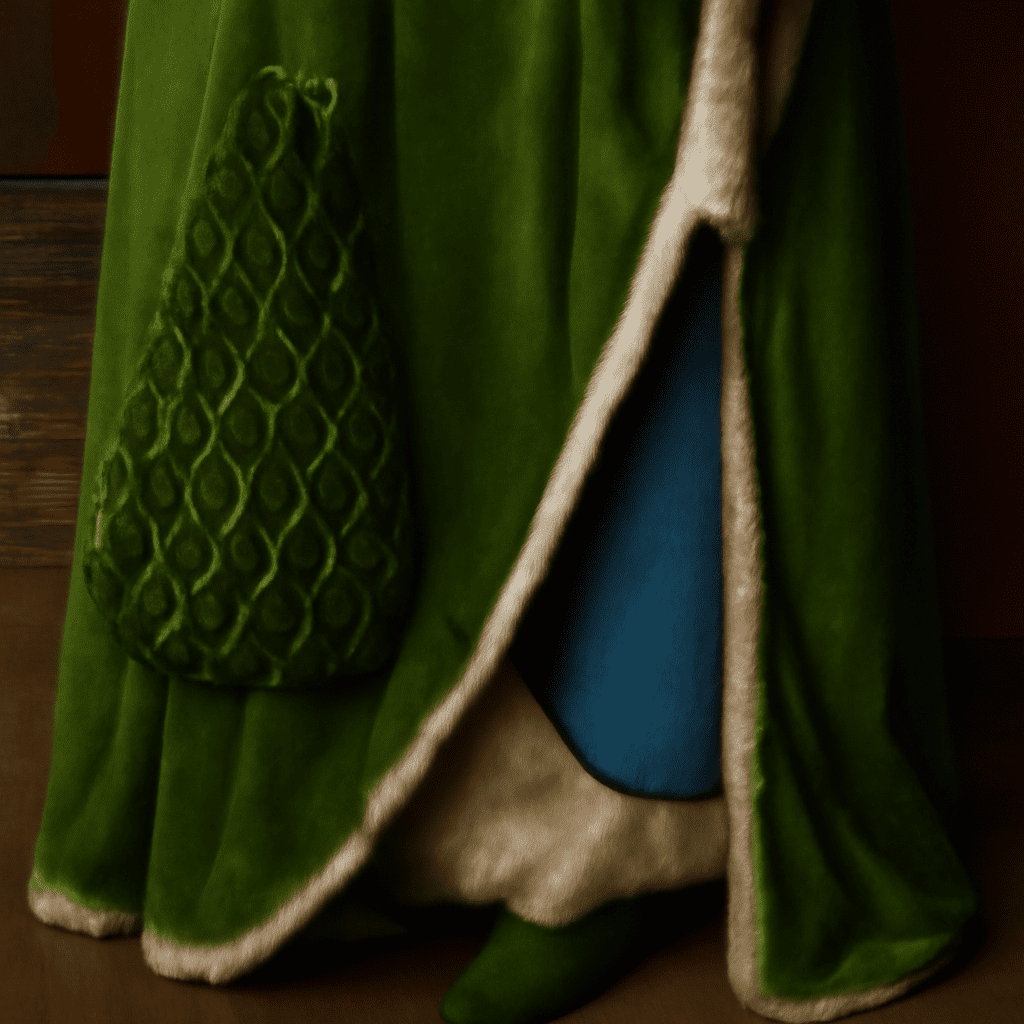
In the Portrait of Giovanni Arnolfini and His Wife, the rich, ornate garments speak volumes about their social status. The luxurious fabrics and intricate designs are not merely fashion statements; they are deliberate choices by the artist to convey the couple’s wealth and position. This depiction reinforces the era’s cultural norms where attire was a primary indicator of social standing.
The Mirror: A Reflection of Reality and Art
The convex mirror in the background serves as a focal point, reflecting both reality and the mystical nature of art. Within its small frame, it captures not only the couple but also two figures, possibly the artist himself and a witness, suggesting a narrative beyond the visible scene. This device invites you to consider how art mirrors life and the hidden layers within each piece.
Hidden Symbols: What Do They Mean?
The painting is replete with hidden symbols, from the solitary candle in the chandelier to the positioning of figures. Each element invites interpretation and reflection. For instance, the oranges on the windowsill may symbolize prosperity, while the small dog at their feet often represents loyalty. These details, masterfully woven into the composition, enhance the depth and intrigue of the work.
Artistic Techniques in Jan Van Eyck’s Giovanni Arnolfini and His Wife
The Use of Light and Shadow
Van Eyck’s innovative use of light and shadow in the Portrait of Giovanni Arnolfini and His Wife adds dimension and life, illustrating his mastery of chiaroscuro. The subtle gradations of light not only highlight the subjects but also create a realistic atmosphere that anchors them in their spatial environment.
Detailed Textures and Realism
Through meticulous brushwork and layer after layer of translucent paint, Van Eyck achieved an astounding level of realism. The detailed textures of fabric, skin, and furnishings invite you to explore the tactile world he meticulously crafted. Each brushstroke is a testament to the artist’s patience and skill, capturing the essence of reality with breathtaking accuracy.
The Legacy of Jan Van Eyck’s Arnolfini Portrait
Influence on Future Artists
Van Eyck’s work set a new standard for future generations, influencing artists across Europe. His techniques in using oil paints and attention to realistic detail became foundational elements in the evolution of Western art. As you study this portrait, you witness the birth of modern artistic practices that continue to inspire today.
The Portrait’s Place in Art History
The Arnolfini Wedding holds a significant place in art history, not only for its technical prowess but also for its storytelling through symbolism. It remains a touchstone for scholars and enthusiasts, a perfect blend of art and narrative that captivates and inspires. Its enduring legacy is a testament to Van Eyck’s genius and the timeless nature of true artistry.
Safety recap: While exploring historical artworks like the Arnolfini Portrait, remember the importance of preserving these treasures for future generations. Appreciate the delicate balance of art and preservation, ensuring these masterpieces continue to inspire and educate.