

Art has a unique ability to transcend time, offering insights into the minds and cultures of its creators. One such timeless masterpiece is the God and Adam painting, a work that captivates viewers with its profound symbolism and artistic brilliance. Known officially as the Creation of Adam painting, this iconic piece features the famous Creation of Adam hands, symbolizing the divine connection between God and humanity. To truly appreciate this masterpiece, one must explore its origin, symbolism, artistic techniques, and enduring legacy.
The Origin and History of the Hand of God Painting
The Hand of God painting is a central panel in Michelangelo’s frescoes on the ceiling of the Sistine Chapel, located in Vatican City. Completed between 1508 and 1512, this artwork was commissioned by Pope Julius II as part of a larger project to adorn the chapel’s ceiling. Michelangelo, primarily a sculptor, was tasked with the monumental challenge of painting an expansive 12,000 square feet of ceiling surface.
This ambitious undertaking was not without its difficulties. Michelangelo worked under intense pressure, often lying on his back on scaffolding for hours. However, his exceptional skill and dedication resulted in a masterpiece that has been admired for centuries. The creation scene, with its dramatic portrayal of the hand of God reaching out to Adam, stands as a testament to Michelangelo’s genius and the High Renaissance’s artistic accomplishments.
Symbolism in the God and Adam Painting
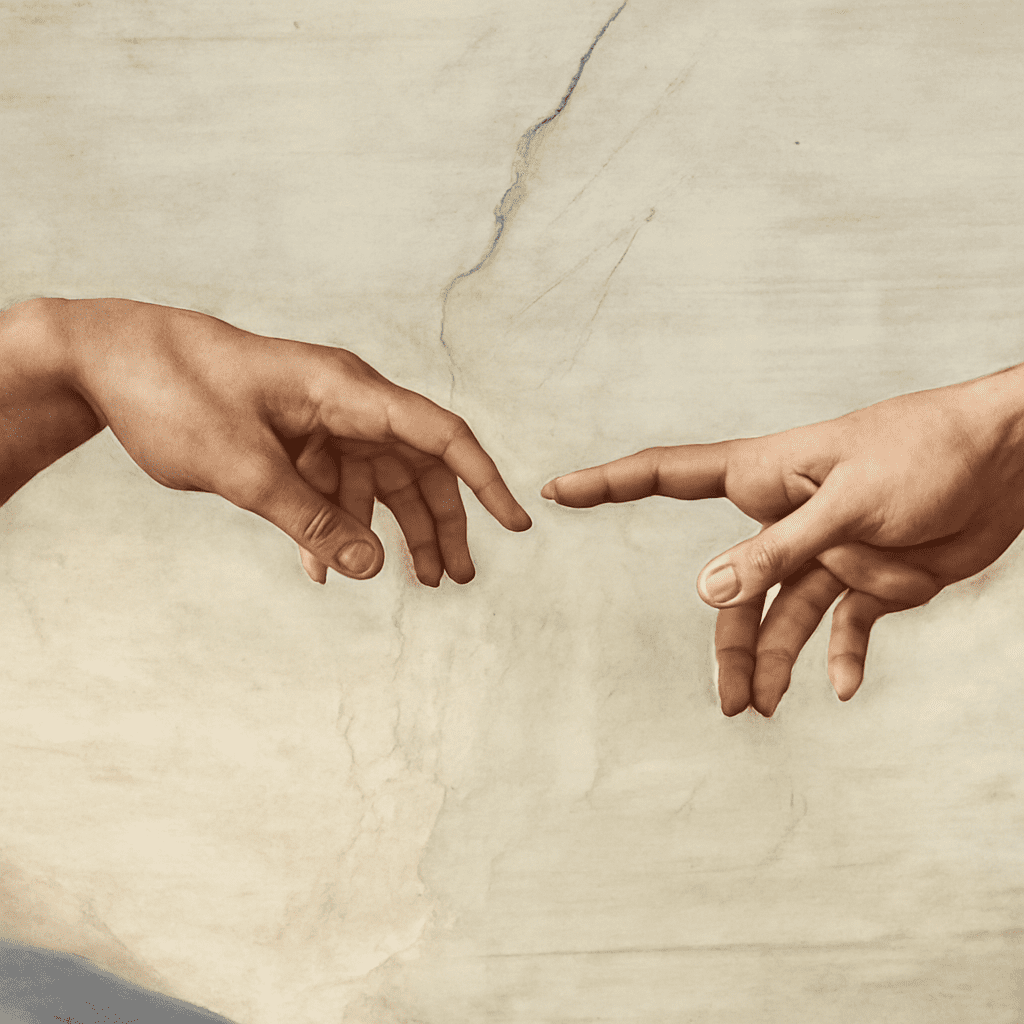
The God and Adam painting is rich with symbolism, much of which has been the subject of scholarly debate and interpretation. The image of God’s finger reaching out to touch Adam’s embodies the moment of creation, suggesting not only the birth of man but also the divine spark of life. The symbolism extends beyond the physical touch, implying a deeper spiritual connection between the divine and human realms.
Moreover, the figures surrounding God are believed to represent various theological and philosophical concepts. Some art historians suggest they symbolize angels or the nine muses of Greek mythology. This layered symbolism adds a profound depth to the painting, inviting viewers to ponder the mysteries of life, creation, and the divine.
Analyzing the Creation of Adam Painting
Examining the Creation of Adam painting reveals Michelangelo’s masterful use of composition and form. The dynamic poses and anatomical precision reflect his deep understanding of human anatomy, likely influenced by his earlier work as a sculptor. The use of contrapposto, a technique where the human figure is depicted with weight shifted onto one leg, creates a sense of movement and life in the figures.
The hands, arguably the focal point of the painting, are rendered with meticulous detail, capturing the tension and anticipation of the divine moment. The barely-touching fingers of God and Adam create a visual tension that resonates with the viewer, emphasizing the fragility and power of creation itself.
Artistic Techniques in Creation of Adam Hands
Michelangelo’s painting technique in depicting the Creation of Adam hands showcases a remarkable understanding of light and shadow, known as chiaroscuro. This technique enhances the three-dimensionality of the figures, giving them a life-like appearance that was revolutionary at the time. The careful gradation of tones accentuates the hands’ significance, drawing the viewer’s eye to the impending touch between God and Adam.
Additionally, Michelangelo’s use of vibrant colors adds to the painting’s emotional intensity. The contrast between the warm tones of Adam’s body and the cooler, more ethereal colors of God’s robe highlights the separation and impending connection between the earthly and the divine.
Impact and Legacy of the Creation of Adam
The impact of the Creation of Adam extends far beyond its original context. As one of the most replicated and studied images in art history, it has influenced countless artists and continues to inspire contemporary art and culture. The painting’s iconic status is a testament to Michelangelo’s profound impact on art and his ability to capture the human spirit’s essence in his work.
Beyond its aesthetic value, the painting has left an indelible mark on religious and cultural discussions. It challenges viewers to explore their understanding of divinity, humanity, and the nature of creation. As such, the Creation of Adam remains not only a pivotal work of art but also a powerful symbol of human creativity and spiritual aspiration.
In studying the Creation of Adam hands, one uncovers the layers of meaning and artistry embedded in this masterpiece. Whether viewed through the lens of art history, theology, or personal reflection, Michelangelo’s work continues to captivate and inspire, proving that the Hand of God painting is indeed a timeless masterpiece.