


In a world saturated with art, finding a truly distinctive style can be a daunting task. Yet, Takashi Murakami art stands as a beacon of innovation, blending traditional Japanese motifs with contemporary pop culture. His vibrant creations have not only captivated audiences worldwide but have also carved out a unique place in the art realm. Discovering how Murakami integrates these elements offers a profound insight into his artistic genius and the mesmerizing effect it has on both enthusiasts and casual viewers alike.
The allure of Murakami’s artwork lies in its fusion of the past and present, merging historical Japanese art forms with modern-day influences. This synergy has propelled Murakami to the forefront of the artistic community, where his work is celebrated for its audacious colors and provocative themes. By delving into the origins, stylistic elements, and themes of Murakami’s art, you can fully appreciate his contribution to the global art scene.
The Origins of Takashi Murakami Art
The roots of Takashi Murakami art are deeply interwoven with his early academic pursuits and personal experiences. Born in Tokyo, Murakami was initially influenced by traditional Nihonga painting, a style that emphasizes classical Japanese techniques and subjects. His formal education at the Tokyo University of the Arts laid the groundwork for his distinctive approach, which he later expanded by incorporating Western art styles.
Murakami’s transition from traditional to contemporary art was catalyzed by his exposure to animation and popular culture during the late 20th century. This period of experimentation allowed him to develop a hybrid style that seamlessly integrates disparate artistic influences. This innovative blend forms the foundation of his unique artistic expression, recognized as the “Superflat” movement, which challenges conventional perspectives on art and culture.
Understanding Murakami’s Artistic Style
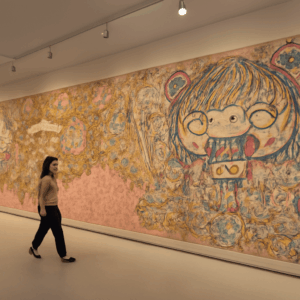
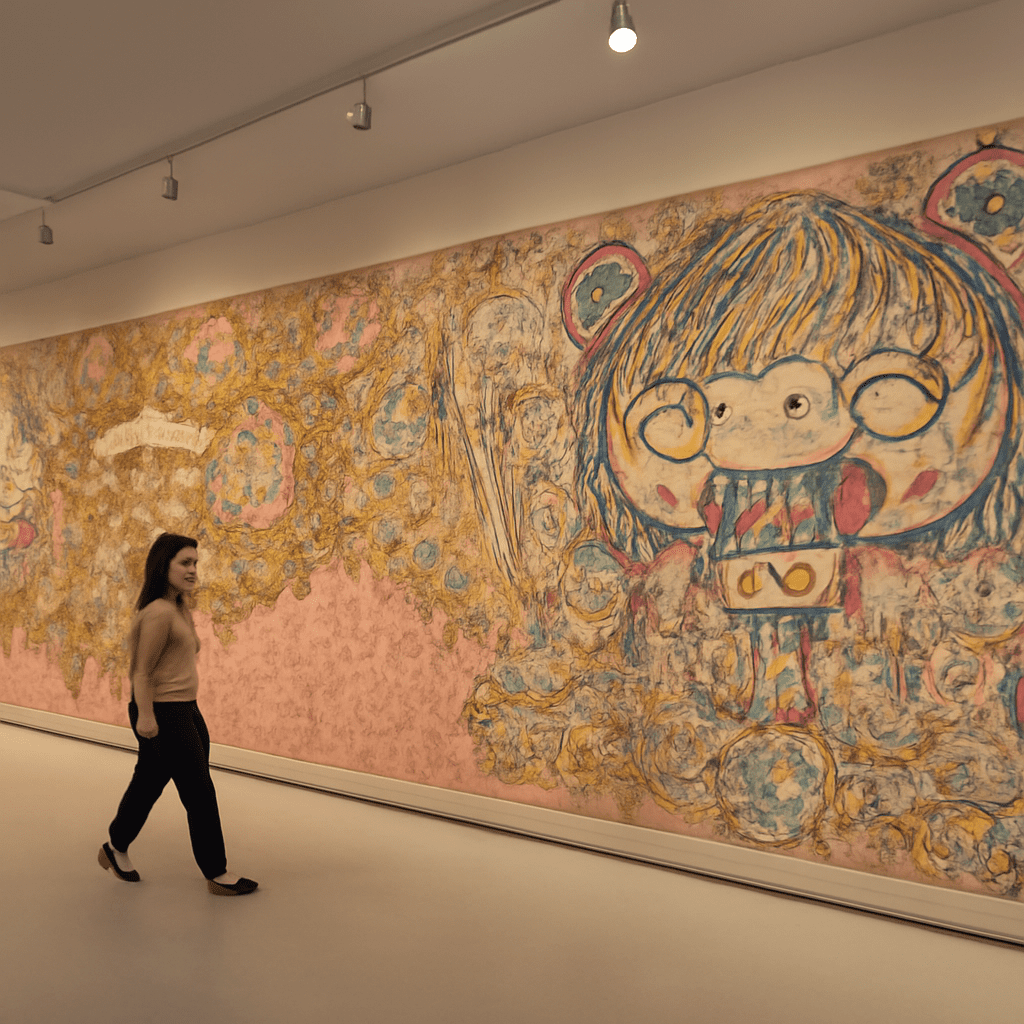
Decoding Murakami’s unique style reveals a mélange of bright, bold colors and flat, graphic forms that are instantly recognizable. The term “Superflat,” coined by Murakami himself, encapsulates the essence of his art: the elimination of depth and the merging of high and low culture. This stylistic choice not only defines Murakami’s work but also underscores his critique of contemporary consumer society.
Murakami’s technique often involves the use of digital technology to create precise, vibrant images that he then translates onto large canvases or three-dimensional sculptures. His art is characterized by its playful and often whimsical nature, featuring recurring motifs such as smiling flowers and fantastical creatures, all rendered in vivid color palettes. This distinct visual language is both a celebration and a commentary on the ubiquitous reach of consumer culture.
Key Themes in Murakami Art
Exploring themes in Murakami art reveals a complex interplay of cultural commentary and personal reflection. One of his most prevalent themes is the juxtaposition of tradition and modernity, where ancient Japanese aesthetics meet contemporary pop culture. This dialogue between past and present is a recurring motif in Murakami’s work, offering viewers a multifaceted perspective on cultural evolution.
Another significant theme is the exploration of identity and the human experience. Through his art, Murakami often addresses issues of consumerism, globalization, and the loss of cultural heritage. His work invites viewers to reflect on their own experiences in an increasingly interconnected world, challenging them to consider the impact of cultural homogenization.
Influence of Japanese Culture on Murakami Art
How Japanese culture shapes Murakami’s creations is evident in his continued reliance on traditional art forms and cultural symbols. His work frequently pays homage to Edo-period Ukiyo-e prints, which are characterized by their flat planes and vibrant colors. This historical influence is seamlessly integrated with modern aesthetics, creating a unique dialogue between eras.
Moreover, Japanese pop culture, including manga and anime, plays a pivotal role in Murakami’s artistic vision. This influence manifests in his use of cartoon-like characters and fantastical elements, which are deeply rooted in contemporary Japanese media. This synthesis of traditional and modern Japanese culture gives Murakami’s work its distinctive edge and universal appeal.
The Impact of Murakami Art on Global Design
Murakami’s influence on global design is profound, with his art transcending traditional gallery settings to permeate various aspects of popular culture. His collaborations with fashion brands like Louis Vuitton have brought his Superflat aesthetics to a wider audience, blurring the lines between fine art and commercial design.
Furthermore, Murakami’s impact extends beyond fashion, influencing a range of media including film, music, and architecture. His distinctive style has inspired a new generation of artists and designers who draw on his innovative use of color and form to craft their own creative narratives. This widespread influence underscores Murakami’s role as a pivotal figure in the contemporary art world.
Where to Experience Murakami Art
For those eager to see Murakami’s art in person, several venues around the world offer the opportunity to experience his vibrant creations firsthand. Major museums and galleries often feature his work in both permanent collections and temporary exhibitions, providing insights into his artistic journey.
Additionally, fans can explore Murakami’s art through his commercial collaborations, which are displayed in flagship stores and fashion boutiques globally. These accessible venues allow a broader audience to engage with his art, bridging the gap between traditional art spaces and everyday environments.
Next Steps: To truly appreciate Murakami’s art, immerse yourself in both his historical influences and modern interpretations. Visit galleries and exhibitions showcasing his work, and explore related media such as documentaries and publications. By engaging with the broader context of his art, you can gain a deeper understanding of the cultural and personal narratives that define his vibrant world.