



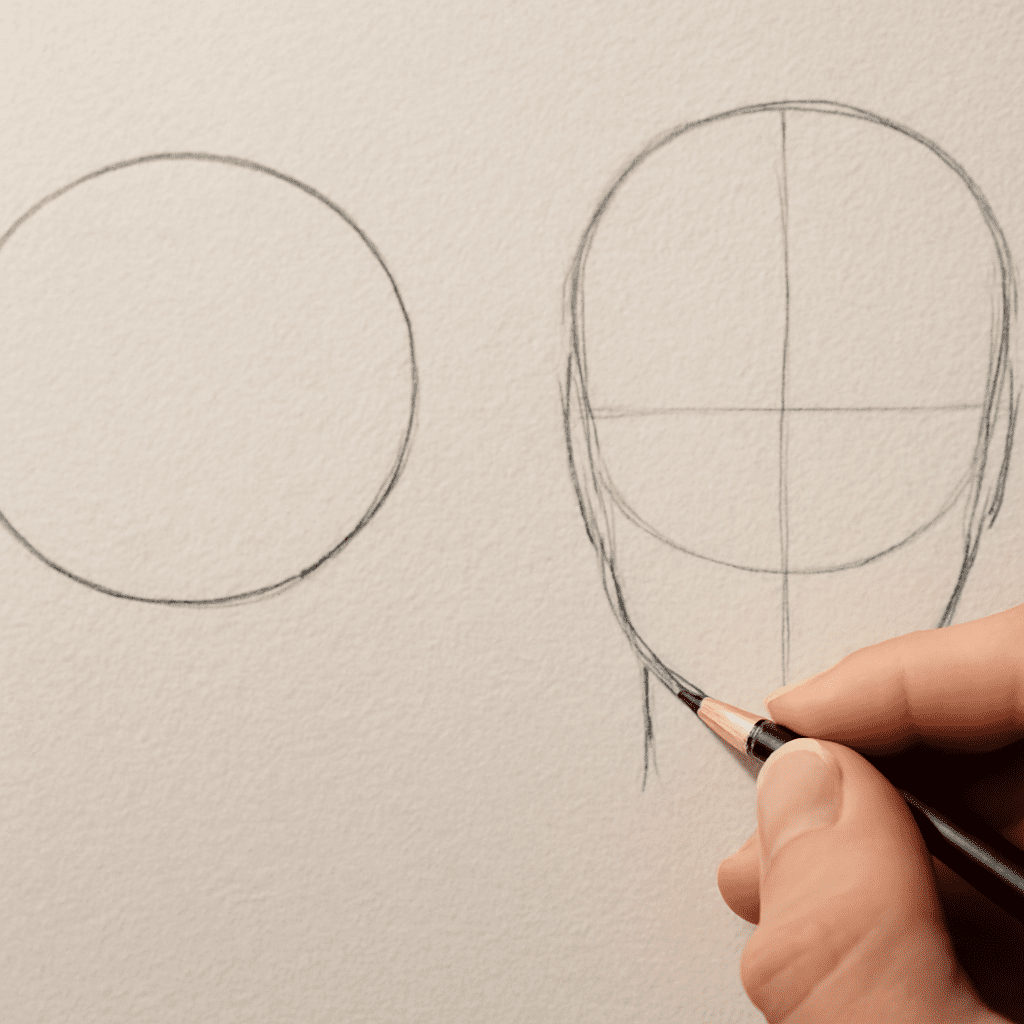
Drawing a human face can be an intimidating task for many aspiring artists. Striking the right balance between creativity and technical accuracy is not always easy. However, understanding the foundational principles of drawing human faces can turn this daunting challenge into an enjoyable pursuit. Whether you’re learning to draw faces for the first time or refining your skills, using effective techniques can significantly enhance your artistry.
Getting Started: Basic Materials and Setup
Before you begin your journey in drawing, it’s essential to gather the right materials. A quality set of pencils ranging from hard (H) to soft (B) grades will provide you with the necessary tools for different shading techniques. Additionally, a good-quality eraser and a sketchpad with smooth, durable paper greatly enhance your drawing experience. Ensure your workspace is well-lit, allowing you to observe details accurately as you draw faces.
Understanding the Proportions of the Human Face
Understanding face proportions is crucial to capturing a realistic likeness. The human face is structured in a way where symmetry and proportions play a pivotal role. Generally, the eyes are positioned halfway down the head, with a similar spacing between them equating to the width of one eye. The bottom of the nose aligns with the bottom of the ear, while the mouth sits approximately a third of the way from the nose to the chin. Observing these proportional rules as you draw can help in portraying a more lifelike image.
Step-by-Step Guide to Drawing Human Faces
Begin by sketching a simple oval shape that represents the head. Lightly draw a vertical line down the center to divide it symmetrically, followed by a horizontal line halfway down for the eyes. Add additional lines for the nose and mouth to establish the basic proportions. Next, sketch the eyes, ensuring they are evenly spaced. Proceed to draw the nose and mouth, using soft strokes to outline initial shapes. As you refine, add detail to the eyes, such as the iris and eyelid folds, and delineate the lips and nostrils with gentle curves. Finish by adding shading to give depth and dimension to your drawing.
Common Mistakes and How to Avoid Them
One frequent mistake is misplacing facial features, leading to an unrealistic look. Double-check your guidelines to ensure eyes, nose, and mouth are correctly aligned. Another common error is overusing heavy lines. Begin with light strokes to allow for adjustments and avoid harsh outlines. Additionally, neglecting to vary shading can result in a flat appearance. Use a range of pencil shades to introduce depth and contrast, enhancing the realism of the face.
Tips for Learning to Draw Faces Like a Pro
Practice is key when learning to draw faces like a pro. Allocate time each day to practice sketching various facial angles and expressions. Study anatomical books and real-life subjects to deepen your understanding of facial musculature and movement. Seek feedback from peers and mentors to identify areas for improvement. Lastly, embrace experimentation with different styles and techniques to find what works best for you, gradually honing your unique artistic voice.