

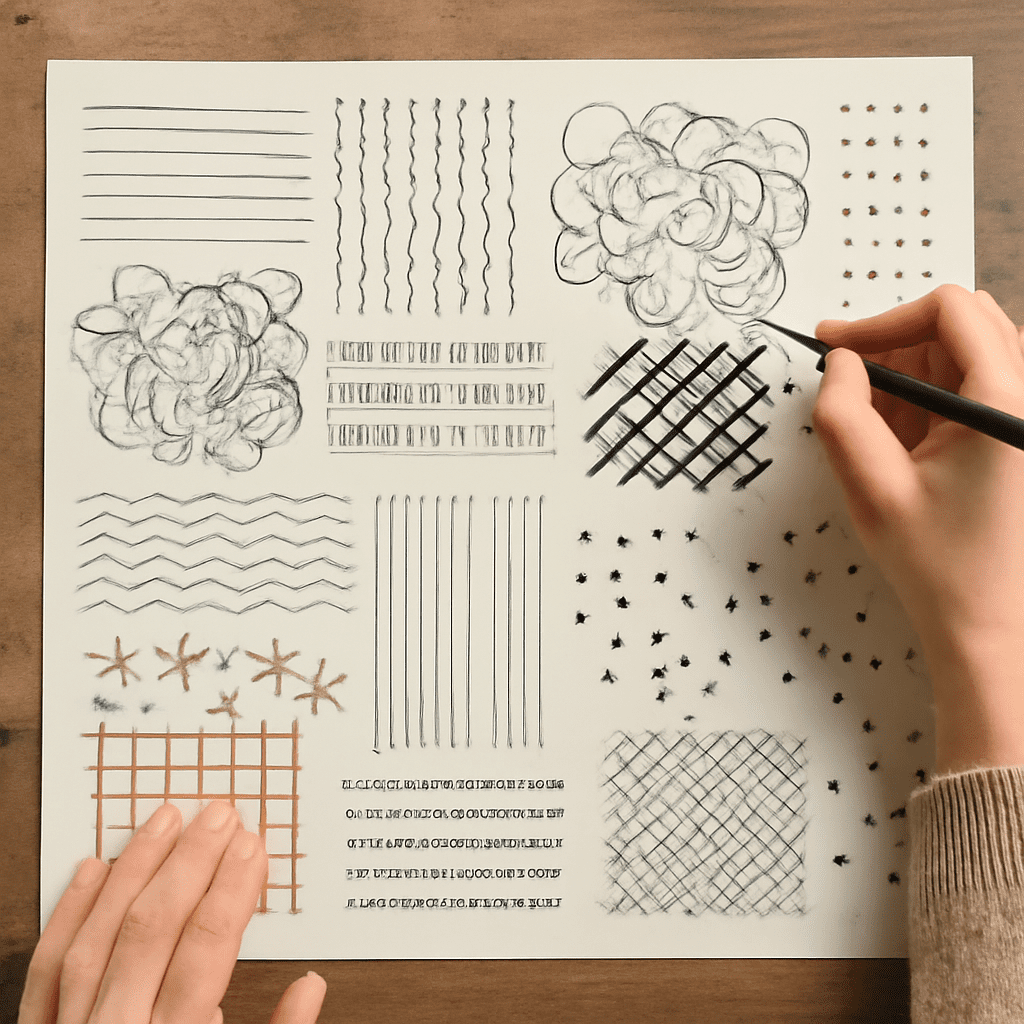
Doodle patterns have become a favorite way for creative minds to unwind, explore ideas, and enhance their artistic voice. However, many beginners feel stuck staring at a blank page, unsure where to start or how to build engaging doodle lines. The process can seem daunting without a clear path or the right tools, leading to frustration instead of relaxation.
Thankfully, mastering the basics of doodle patterns is accessible to everyone. With a handful of essential drawing & design basics, you can turn simple doodle lines into expressive, intricate compositions. This article will guide you through practical techniques, tool selection, and style development to help you unlock the full potential of creative doodling.
Understanding Doodle Patterns and Their Creative Potential
Doodle patterns are more than idle scribbles; they are structured, repeating marks that transform a blank page into a canvas for visual storytelling. When you practice making doodle patterns, you invite spontaneous creation and imaginative thinking into your drawing routine. The repetitive flow of shapes and lines can be meditative, allowing your mind to wander while your hand creates order out of chaos.
Exploring a variety of patterns lets you experiment with rhythm, contrast, and balance—core principles of drawing & design basics. You might start with parallel lines or geometric motifs and then branch into organic swirls, zigzags, or custom marks. Each approach challenges you to perceive space differently, improving your overall composition skills.
As you gain confidence, the process of doodling can spark new design ideas. Many artists and designers use doodle patterns as warm-ups or brainstorming tools, discovering fresh motifs for larger works. Creative expression through doodling isn’t just for sketchbooks; these patterns appear in textiles, digital art, murals, and even product packaging, proving their versatility.
Ultimately, learning to work with doodle lines and structured pattern-making is an effective way to cultivate your sense of design, unlock creative blocks, and develop a distinct artistic voice.
Essential Tools and Materials for Drawing Doodle Lines
The right supplies make doodling more enjoyable and help you achieve clean, consistent doodle lines. While you can start with whatever is on hand, investing in a few key drawing & design basics will improve your results and expand your creative range.
For paper, choose a smooth surface that won’t fray your pens or pencils. Sketchbooks with heavyweight, acid-free sheets prevent bleed-through when using ink. If you love DIY experimentation, try mixing colored card stock with gel pens or metallic markers for striking contrast. The type of paper you use can subtly influence the look and feel of your patterns.
As for drawing instruments, fine-liner pens are the gold standard for crisp, defined doodle lines. Choose sizes from 0.1mm for delicate detail to 0.8mm for bold strokes. Mechanical pencils offer precision for rough layouts, while soft graphite allows for gentle shading and erasing. Don’t overlook brush pens, which enable variable line weight and smooth, expressive strokes—perfect for adding flair to repeating patterns.
For more adventurous creators, digital drawing tablets and stylus pens are a modern alternative. These tools let you experiment with endless textures and effects, enabling quick undo and layering. Regardless of your medium, keep a soft eraser and ruler nearby for corrections and cleaner edges. Consistently using the proper materials lays a strong foundation for your doodle practice.
How to Start Drawing Doodle Patterns: Step-by-Step Basics
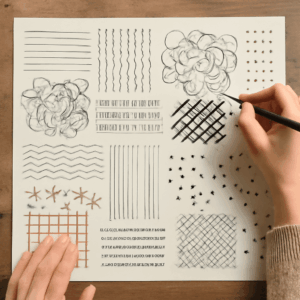
Jumping into doodling doesn’t require elaborate planning. To begin, warm up your hand with a few basic exercises—fill a corner of your page with parallel lines, spirals, or dots. These simple marks tune your coordination and get you comfortable with your chosen tools.
Next, outline a loose grid or border to frame your work. Sketching a faint pencil guide helps you keep your doodle patterns organized and balanced, especially when layering multiple motifs. Once your framework is set, select a starting doodle line—perhaps a zigzag, scallop, or looping curve. Repeat this mark, varying its size, direction, or spacing as you move across the page.
Building on foundational drawing & design basics, gradually introduce new shapes or fill spaces between lines with dots, crosshatches, or waves. Allow yourself to improvise—sometimes the most engaging patterns emerge through playful exploration rather than strict repetition. As you progress, step back frequently to assess the composition, adjusting your approach to maintain harmony and interest.
Remember, doodling is a low-pressure way to practice. If a section feels cluttered or awkward, try overlaying fresh doodle lines or using a white gel pen to break up dense areas. Over time, you’ll develop a stronger intuition for pattern flow and design balance, making your creations more dynamic and satisfying.
Popular Doodle Lines That Bring Your Art to Life
Certain doodle lines appear again and again in both casual sketches and professional pattern design. Mastering these classics provides a versatile vocabulary for your own creative compositions. Straight lines and parallel marks form the backbone of many doodle patterns, offering structure and rhythm. By reordering the direction or adjusting the thickness, you can create visual movement and texture.
Curved lines, waves, and spirals introduce a playful energy, contrasting with sharp geometric motifs. Try layering looping curves with delicate dots to create depth and variation, or alternate between scallops and zigzags for a lively border effect. Even mixing different doodle lines—pairing crosshatching with swirls or blending diagonals with meandering lines—can yield fresh, unexpected results.
Embrace experimenting with more advanced techniques, such as filling negative space with fine stippling or building up fields of interwoven marks. Combining these approaches will help you break free from repetitive habits and breathe new life into your doodle patterns. Whether you prefer subtle, minimal linework or bold, graphic arrangements, these essential marks serve as building blocks for countless designs.
Over time, you’ll develop your own favorite doodle lines, customizing them to fit your artistic goals and personal style. Let repetition and practice guide your hand as you invent new combinations and push your creative boundaries.
Tips for Developing Your Unique Doodle Style
Every artist’s doodle patterns eventually take on a signature flair. To cultivate your style, start by observing the shapes and motifs you return to most often. Are you drawn to organic curves, tight geometric grids, or freeform experimentation? Notice the unique way your hand forms doodle lines, and consider exaggerating these personal quirks for emphasis.
Challenge yourself by setting simple prompts, such as filling a page with only diagonal lines or layering dots over hatching. Exploring these drawing & design basics in different contexts reveals surprising variations and helps you break creative blocks. Incorporate references from nature, textiles, and architecture—adapting external influences can spark fresh patterns and ideas.
Practice adapting your favorite doodle lines to different surfaces and media. Try working with larger formats, colored backgrounds, or digital canvases. Adjusting the context pushes your creative problem-solving and sharpens your pattern-making instincts. As you experiment, document your progress in a dedicated sketchbook or digital folder, noting which approaches feel most inspiring and authentic.
Above all, consistency is key. The more you draw, the more your individual style will crystallize. Trust your instincts, embrace imperfections, and let the process of doodling remain playful and exploratory. Your unique visual language will evolve naturally with time and attention.
Safety recap: Always use non-toxic, archival drawing materials and ensure adequate lighting for prolonged sessions. Take regular breaks to avoid hand fatigue and store pens capped to prevent ink spills. With proper care, your tools and doodle patterns will remain vibrant and enjoyable for years to come.