
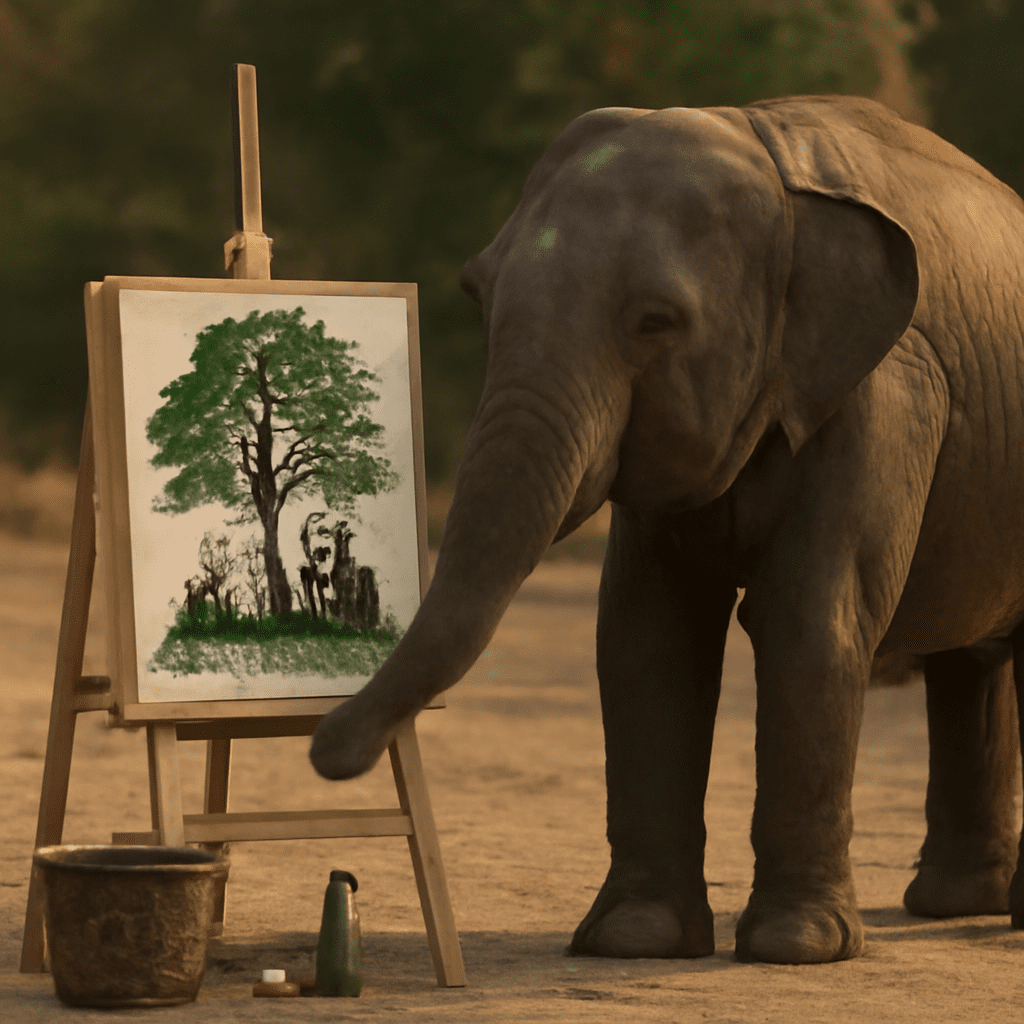
In the world of art, paintings by elephants offer an unexpected and captivating experience, redefining the boundaries of creativity. When you witness a painting by elephant, it challenges your preconceived notions of who can be an artist and expands your understanding of creative expression. These majestic creatures wielding brushes produce works that are not only aesthetically pleasing but also provoke deeper reflections on nature and intelligence. Let’s explore how the talents of an elephant artist unfold, transforming what might seem like a novelty into a profound artistic phenomenon.
Introduction to Elephant Painting
Understanding the Phenomenon
The idea of elephant painting is intriguing, sparking questions about how these gentle giants create art. Through a unique process, elephants are guided to use brushes and colors, crafting pieces that are both stunning and thought-provoking. This phenomenon pushes the boundaries of art, demonstrating the unexpected talents these animals possess.
History of Elephant Painting
Elephant painting has a rich history dating back several decades, with origins in Thailand and other parts of Southeast Asia. Initially, it began as a way to entertain tourists, but quickly evolved into a recognized form of artistic expression. Over time, these paintings by elephants began to receive serious attention, highlighting the intricate behaviors and cognitive abilities of these creatures.
The Process Behind Paintings by Elephants
Training Elephants for Art
Training elephants to paint involves patience, positive reinforcement, and a deep understanding of elephant behavior. Trainers, often called mahouts, work closely with these animals, using gentle encouragement to guide their trunk movements. Over time, these giant artists learn to create deliberate strokes on the canvas, allowing for the emergence of genuine artistic flair.
Tools and Techniques Used
The tools elephants use are specially designed to accommodate their size and strength. Brushes with long handles are a staple, allowing the elephant to comfortably hold and maneuver them with their trunks. The techniques employed often include dabbing, sweeping, and swirling motions, which result in vibrant and dynamic paintings. The use of non-toxic paints ensures safety for the elephants, emphasizing the importance of ethical practices in elephant artistry.
Famous Elephant Artists
Notable Elephant Painters
Several elephants have gained fame for their impressive artworks, with some even achieving international recognition. For instance, an elephant named Suda has captivated audiences with her abstract paintings, which are celebrated for their bold colors and expressive lines. These renowned elephant artists demonstrate a remarkable capacity for creativity and individuality in their work.
Stories of Elephant Artistry
Each painting by an elephant tells a story, revealing insights into their emotions and thought processes. Stories of elephants like Ruby, who began painting at the Phoenix Zoo, highlight the potential for self-expression among these animals. These narratives contribute to a broader understanding of the cognitive and emotional depth of elephants, making their artworks even more significant and inspiring.
How Elephant Paints Create Unique Artwork
Analyzing Styles and Techniques
The artistic styles of elephant paints are as varied as those of human artists. Analyzing these styles reveals a preference for bold, sweeping strokes and vibrant palettes. Unlike human artists, elephants use their trunks to manipulate the brushes, resulting in unique textures and patterns that set their work apart.
Comparing to Human Art
When you compare elephant-created art to human-created art, you’ll notice distinct differences and intriguing similarities. While elephants lack formal art training, their instinctual approach leads to spontaneous and often whimsical compositions. This comparison underscores the fascinating overlap between innate creativity and learned techniques, offering a fresh perspective on artistic processes.
Why Elephant Painting Matters
Impact on Conservation
Elephant painting plays a crucial role in conservation efforts, raising awareness and funds for the protection of endangered elephant populations. The sale of these artworks often supports elephant sanctuaries and conservation projects, making each painting by elephant an important tool for environmental advocacy.
Cultural Significance
Beyond conservation, elephant painting holds cultural significance, bridging the gap between humans and animals through shared artistic experiences. In many cultures, elephants represent wisdom and strength, and their participation in art highlights these attributes. This cultural relevance enriches our understanding of the interconnectedness between human and animal worlds.
In conclusion, elephant painting is more than just a curious novelty; it represents a meaningful interaction between humans and elephants. Whether it’s the vibrant colors or the gentle brushstrokes, each painting by elephant tells a story of beauty, intelligence, and harmony. The contributions of these elephant artists remind us of the wonders that emerge when we embrace the unexpected.
Safety recap: Always ensure that the paints and materials used are non-toxic and safe for elephant use. This not only protects the elephants but also ensures the ethical integrity of the art-making process.