

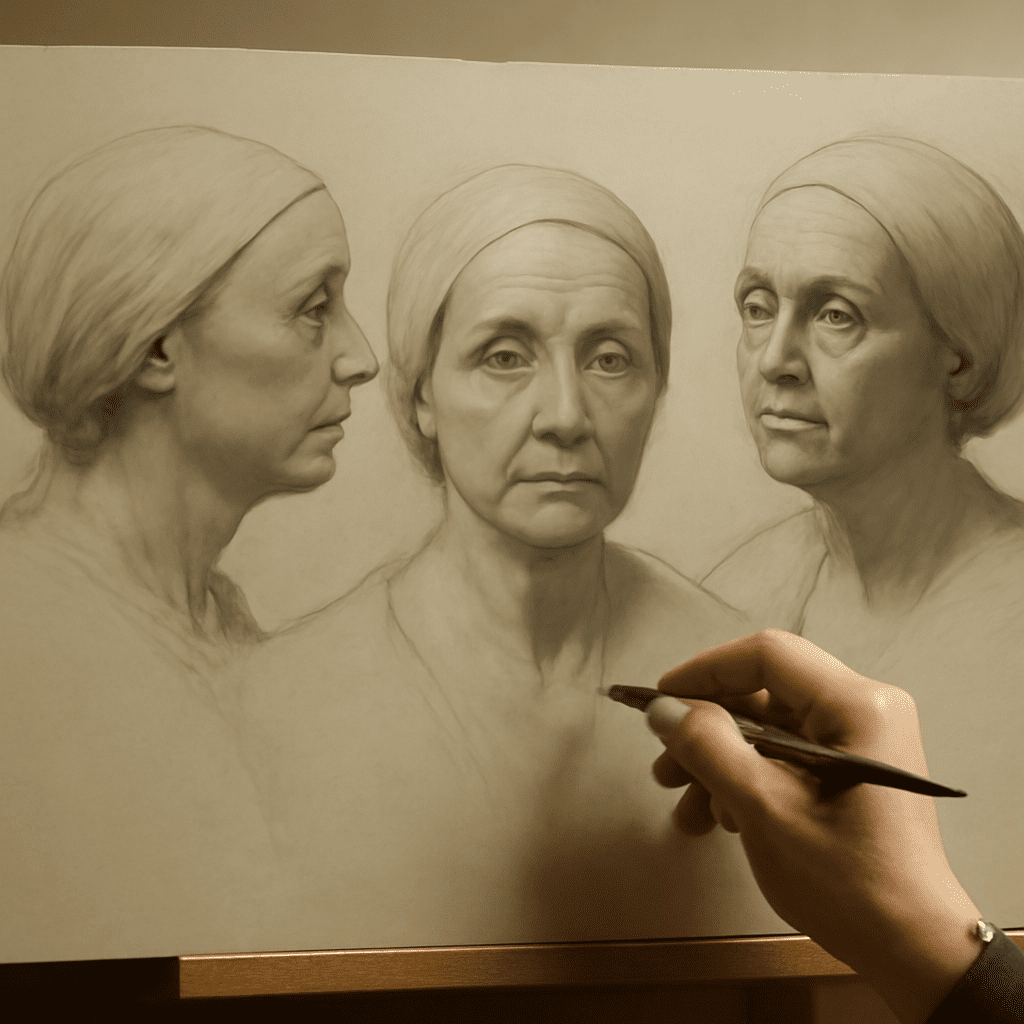
Drawing realistic portraits can be a challenging yet rewarding experience. Many aspiring artists often grapple with how to draw a portrait that truly captures the essence of the subject. The good news is that, with practice and the right techniques, you can learn how to draw a good person and create stunning portraits. This guide will provide you with essential tips, from mastering proportions to refining details, ensuring your drawings come to life with skill and precision.
To embark on your artistic journey, you’ll need to understand the fundamentals of drawing people, including the anatomy and the tools necessary for creating life-like portraits. Throughout this guide, we will explore step-by-step instructions and professional techniques to enhance your drawing skills. Whether you’re a beginner or an intermediate artist, these insights will help you draw portraits with confidence.
Introduction to Drawing People
Understanding Proportions and Anatomy
The first step in learning how to draw people is understanding the human anatomy and proportions. This involves studying the relationship between different body parts. For instance, when sketching a face, the eyes should typically sit halfway down the head, while the nose should align with the ear tips. Practice drawing proportional figures using reference guides and real-life observations to fine-tune your skills.
Materials and Tools You Need
Your artistic toolkit significantly impacts your output. Essential materials include various pencils for shading, erasers, and high-quality paper. For more detailed work, consider using fine-tipped pens and blending stumps. Investing in these tools will enable you to draw a portrait with greater depth and precision. Experiment with different materials to find what works best for your style.
How to Draw a Portrait: Step-by-Step Guide
Starting with Basic Shapes
Begin your portrait by sketching basic shapes to outline the face and head. Use ovals for the head, lines for the jawline, and circles to guide the placement of eyes and ears. These foundational steps are crucial in achieving accurate proportions. This methodical approach sets the stage for adding intricate details later.
Refining Features and Details
Once the basic framework is established, concentrate on refining facial features. Focus on capturing the unique characteristics of each feature, like the curve of the lips or the shape of the eyes. Pay attention to light and shadow to add depth, using techniques like cross-hatching for texture. This phase is where your portrait begins to assume realistic dimensions.
Techniques for Drawing Portraits Like a Pro
Shading and Texturing Techniques
Mastering shading techniques is essential for adding realism to your portraits. Gradual shading gives a three-dimensional effect, while blending tools help smooth transitions between light and dark areas. Use different pencil grades to achieve a range of textures, enhancing the tactile quality of the hair, skin, and facial contours.
Capturing Expressions and Emotions
Portraying emotions is key to drawing a good person in your artwork. Study how facial muscles move to convey different expressions. Observe real-life subjects and photographs to understand subtle nuances in expressions. Practicing these techniques will add life and personality to your portraits, making them resonate with viewers.
Tips on How to Draw a Good Person
Common Mistakes to Avoid
Avoiding common mistakes can significantly improve your drawing skills. Many beginners make the error of over-emphasizing outlines, which can flatten the image. Focus instead on subtle shading and contouring to create volume. Another pitfall is neglecting the symmetry of facial features, which can lead to unbalanced portraits. Regular practice and self-assessment will help you steer clear of these issues.
Practice Exercises
Enhance your skills with targeted practice exercises. Try sketching different facial angles, experimenting with diverse lighting conditions, or replicating expressions from photographs. Set aside dedicated time daily to practice these exercises, and over time, you will notice substantial improvement in your ability to draw a portrait with realism and character.
Final Thoughts on Drawing Portraits
Mastering how to draw portraits requires patience, practice, and an eye for detail. As you apply the techniques and tips provided in this guide, you’ll gain confidence in your ability to create captivating and nuanced portraits. Always remember that each drawing session is an opportunity to learn and refine your skills. Embrace the journey, and you will see continual growth as an artist.